

Meet the Australian Journal of Grape and Wine Research Editorial Team
Senior Editor
Dr Terry Lee OAM
|
Terry Lee retired in 2004 from the positions of Vice President and Chief Scientific Officer of E. & J. Gallo Winery, the large family-owned winery based in Modesto, California. Before joining Gallo, Terry was the Director of the Australian Wine Research Institute (AWRI) in Adelaide for 14 years. Terry holds a BSc and PhD in Food Technology from the University of New South Wales. Terry was awarded a Centenary Medal in 2001 and in 2007 was made a Patron of the Australian wine industry and was awarded an OAM in the Queen’s Birthday Honours List. He is also a Fellow of the Australian Academy of Technological Sciences and Engineering, the Australian Institute of Food Science and Technology and the ASVO. Terry has always been interested in the dissemination of research and technical information in a clear, positive and unambiguous manner. This interest has been applied through the editing of the theses of his graduate students, the journal Food Technology in Australia, the ASVO one–day seminar proceedings, the Australian Wine Industry Technical Conference proceedings, the AWRI Technical Review, and the research and technical papers of his students and staff. |

Deputy Editors
Assoc. Prof. Paul Petrie
|
Dr Paul Petrie is the Principal Scientist – Viticulture and Program Manager of the Irrigated Crops group at the South Australian Research and Development Institute. He also holds the roles of Affiliate Associate Professor at the University of Adelaide and Adjunct Associate Professor at the UNSW. Paul has extensive experience in the Australian wine industry which includes working in research and extension at the Australian Wine Research Institute and as the National Viticulturist at Treasury Wine Estates. Paul grew up helping his parents establish a vineyard in New Zealand and before moving to Australia for a role at CSIRO he completed a PhD on canopy management at Lincoln University. Paul leads a viticultural research program aiming to improve the resilience of Australian vineyards; improving their productivity and ability to adapt to climate change. This work includes projects developing strategies to better manage dry winters and to understand and manage vintage compression. He also has an active interest in the application of technology to the wine industry and has previously developed a system to assess grapevine water status using a thermal camera mounted on a smartphone and is currently working on a project to to assess and map grapevine trunk diseases using an action camera. Paul supports a wide range of horticultural projects; including the development of high density almond orchards and the assessment of the recovery of apples and cherries after bushfire damage. |

Dr Kerry Wilkinson
|
Kerry is a Professor of Oenology at The University of Adelaide. Her primary research interests concern the flavour chemistry of grapes and wine, for example: the impact of bushfire smoke on grapes and wine; the improved utility of oak wood for wine maturation; and the influence of production method on the composition and sensory profiles of sparkling wine. Other areas of interest include the chemical and sensory analysis of foods and beverages, and their appeal to consumers. Kerry completed her PhD in wine science and analytical chemistry at Flinders University and The Australian Wine Research Institute. Her appointment as an academic enabled her to combine her passion for both wine education and research. |
Associate Editors
Assoc. Prof. Malcolm Allen Image to come |
Bio to come |
Dr Eveline Bartowsky
|
"I am a microbiologist through and through, and love it – without microbiology we wouldn’t exist! I am an applied microbiologist at Lallemand Australia, working closely with the research and wine communities. Previously I led the bacterial research team at AWRI and also managed the AWRI Culture Collection. In my life before wine, I worked at Umeå University in the Arctic Circle and St Louis in the USA, on penicillin-resistant bacteria, and, when I first returned to Adelaide, I briefly worked at The University of Adelaide in Entomology researching wasps as biocontrol agents of moths damaging flour and dried fruit products. I have presented at several ASVO Oenology seminars and was a member of the most recent Oenology seminar committee. I have attended nearly every Oenology seminar since joining ASVO, and more recently also the Viticulture ones." |

Dr Keren Bindon
|
Dr Keren Bindon is a research manager at the Australian Wine Research Institute (AWRI). She has a background in plant physiology and biotechnology, having studied a BSc and MSc in South Africa. After obtaining a scholarship to study in Australia, she then went on to complete her PhD in Viticulture through the University of Adelaide and CSIRO. Over her career she has specialised in understanding the grape to wine interface. In particular, she has sought to understand factors affecting the extraction and retention of wine macromolecules, from the vineyard, through fermentation, stabilisation and ageing. She has a strong interest in contextualising research to provide meaningful outcomes to the grape and wine industry, and regularly participates in extension activities. |
Dr Rob Bramley
|
Dr Rob Bramley is a Senior Principal Research Scientist in CSIRO’s Integrated Agricultural Systems program, leads the 'Precision Agriculture and Viticulture Team' and is the Site Leader for CSIRO at Waite Campus, Adelaide. He has worked as a soil chemist, on land-use sustainability issues, and since 1996, has had a primary research focus on Precision Agriculture (PA) and the management of variability in agricultural production systems for economic and environmental benefits. He has led significant multi-agency PA projects in the Australian wine and sugar sectors and has been a pioneer in the development of Precision Viticulture for winegrape production systems. Currently he is working on improved understanding of wine 'terroir' and is part of an international project dealing with grape yield estimation. |

Prof. Véronique Cheynier
|
Dr. Cheynier is the director of research at the Institut National de Recherche Agronomique (INRA), working at the UMR Sciences Pour l’Oenologie (Joint Research Unit, Sciences for Enology) in Montpellier, France. She currently heads the Polyphenol Platform and has published more than 200 articles in international scientific journals, and written numerous book chapters and technical articles on various subjects related to the structure, analysis, reactivity and properties (especially color and astringency) of phenolic compounds in plants and foods. In addition, she’s the associate editor of the American Journal of Enology and Viticulture, Australian Journal of Grape & Wine Research and Journal of the Science of Food and Agriculture, and a member of the editorial board of the Journal of Agricultural and Food Chemistry. |
Dr Christopher Davies
|
"Completed honours and PhD in the Biochemistry Department Adelaide University 1988. My thesis dealt with the molecular biology of plant pathogenic RNAs, including self-cleaving RNAs. I was then fortunate to complete a three year post doctoral term in Sir David Baulcombe's laboratory at the Sainsbury Laboratory studying various aspects of plant virus biology. Following this I obtained a position with CSIRO in North Ryde where my interest in fruit began with the study of tomato fruit development. After relocation to the Waite Campus in 1993 the focus remained mainly of fruit development with the study of grape berry development at the molecular and whole organ level. A wide range of aspects have been studied but recent work has focused on developing an understanding of what controls ripening and how this might be manipulated to solve industry problems, such as those resulting from climate change." |
Prof. Serge Delrot
|
Serge Delrot currently works at the Ecophysiology and Grape Functional Genomics, University of Bordeaux. Serge does research in Agricultural Plant Science. Their current project is 'Multiscale modeling of grape berry primary metabolism during growth and ripening. |

Prof. Gregory Dunn Image to come |
Bio to come |
Dr Katherine Evans
|
Kathy's favourite question is 'So What?' because 'Why’ comes before the 'How’ and ‘What’. |
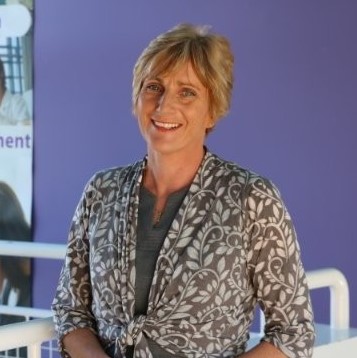
Dr Leigh Francis Image to come |
Biography: Chemical engineering research (Monash University, University of Adelaide), a vintage in a large winery laboratory, a post-doctoral period at University of California Davis Department of Enology and Viticulture (1994-1995). Research: Sensory analysis and wine flavour chemistry, relationships between wine composition and sensory properties, consumer research.
|
Assoc. Prof. Andrew Hall
|
Associate Professor Andrew Hall is an earth scientist with specialist knowledge in climatology and remote sensing, his work reliant on expert application of geographic information science. He is recognised for pioneering work in viticultural applications of high resolution remote sensing and spatial analysis of grapevine phenological responses to climate change and variability. He has research degrees in climatology (MSc, University of Otago) and remote sensing (PhD, Charles Sturt University) and has held various teaching, research, and leadership roles at Charles Sturt University since 2004. From 2018 to 2021 he was acting director of Charles Sturt University’s Institute for Land, Water and Society, leading a research support culture that navigated Covid-related operational constraints during a period of rapidly expanding activity. He currently works with large interdisciplinary research teams as a principal research fellow in geospatial science with a focus on integrated adaptation solutions to climate change and increasing demand on freshwater systems.
|

Assoc. Prof. James Harbertson
|
Research interests are focused on the phenolic compounds found in grapes and wine and their biochemical and chemical changes during grape ripening, winemaking and aging. Example projects include understanding the variability of tannin found in red wine cultivars and the ultimate relationship between tannin, polymeric pigments and astringency. Harbertson works with wineries to solve simple and difficult problems.
|

Affiliate Prof. Paul Henschke image to come |
bio to come |
Dr Diego Intrigliolo image to come |
bio to come |
Prof. Paul Kilmartin
|
"My main areas of research are fairly evenly divided between wine chemistry and applications of conducting polymers with the Biocide Toolbox programme and the Polymer Biointerface Centre, currently involving 6 PhD and 2 MSc/BSc(hons) projects and several international visitors. My main scientific training is in the area of Electrochemistry, coupled with the use of a range of Chromatographic, Spectroscopic and Surface Analysis techniques. Several additional projects to those listed below are being undertaken in collaboration with researchers across the University of Auckland in which Electrochemical facilities are being made available, including projects on chemical sensors and organic electrosynthesis." |

Prof. Stefano Poni
|
Professor of Viticulture and Chair of the Instituto of Frutti-Viticoltura of the Università Cattolica del Sacro Cuore of Piacenza, Italy, since 1 November 2009. He has authored or co-authored 157 papers, 59 of which published in international, refereed journals and 37 edited in international refereed proceedings. He currently serves as a peer reviewer for the following journals: American Journal of Enology and Viticulture, Australian Journal of Grape and Wine Research, HortScience, American Journal of Horticultural Science, Scientia Horticulturae, Functional Plant Biology, Annals of Botany, South African Journal of Enology and Viticulture, Ecological Modeling, Irrigation Science, Journal of Food Composition and Analysis, Journal of the American Society of Horticultural Science, Journal International des Science de la Vigne et du Vin, Agriculture and Forest Meteorology. Associate editor for the Amer. J. Enol. Vitic. since 1 January 2006. |
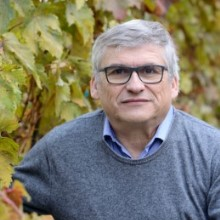
Amber Parker image to come |
bio to come |
Hayley Ridgway image to come |
bio to come |
Renata Ristic image to come |
bio to come |
Dr. Anthony Saliba
|
Anthony's interests are in Perceptual Psychology, and how we interpret sensory experiences to make decisions. He has worked in diverse areas such as telecommunications, consumer behaviour and more recently food and wine. He was the first to discover that personality type influences taste preference, which may be the factor that help unlock a complete understanding of why people like the foods that they do. Anthony's other interest is in taking a Positive Psychology approach to understand how people cope with common Psychological disorders. For instance, the use of wine to control minor and transient levels of anxiety, or how wine increases happiness through social interaction, especially for introverts. More broadly, how sensory experiences help us to maintain happiness and balance. Anthony has been awarded almost 2 million dollars in research funding, and managed over 8 million dollars in research projects focused on Perceptual Psychology. |
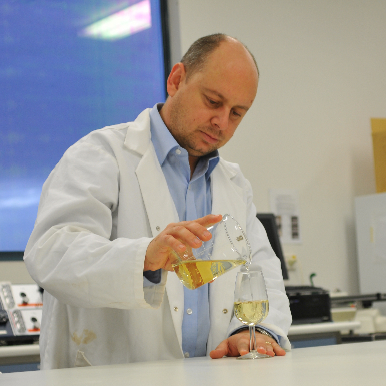
Mark Sosnowski image to come |
bio to come |
Christopher Steel
|
Chris Steel is a PhD graduate of the University of Birmingham (UK) where he completed his research on fusarium wilt of tomato. Subsequent post-doctoral training was completed at the University College of Wales, Aberystwyth, with the agrochemical company Dr R Maag AG in Switzerland and with the NSW Department of Agriculture in Rydalmere, Australia. Much of his post-doctoral career was spent investigating fungicide resistance and modes of action. In 1995 he joined Charles Sturt University where he is currently Professor of Viticulture. Previously he served on the Editorial Board of the journal Plant Pathology for over 20 years. He re-joins the editorial board of the Australian Journal of Grape and Wine Research, having previously held this position from 2013 to 2016. He has been a member of the ASVO since 1995. His research has a wine industry focus with an emphasis on how environmental factors affect disease progression and how plant pathogens impact on food and wine quality. Much of his recent research has involved studies on Botrytis grey mould and other fungi associated with grapevine bunch rots. Aside from his research, he is Head of Discipline for wine science and viticulture education at Charles Sturt University located at the Wagga Wagga campus in NSW. |

Dr Steve Tyerman
|
Professor Tyerman has researched nutrition, salinity and water relations in plants for some 25 years. In 2001 he obtained the Wine Industry Chair of Viticulture at the University of Adelaide. He has received several awards for his plant physiology research and was elected as a Fellow of the Australian Academy of Science in 2003. He is currently head of the Plant Physiology, Viticulture and Horticulture Research Group within the School of Agriculture, Food and Wine, and a member of the Wine Innovation Cluster . He is a Chief Investigator in the Australian Research Council Centre of Excellence in Plant Energy Biology and runs a node of the Cetnre at the University of Adelaide. |

Dr Rob Walker
|
Rob was a member of an ASVO Steering Committee formed in 1994 by Terry Lee to establish the Australian Journal of Grape and Wine Research, the official Journal of ASVO. After serving for a short time as a member of the founding management committee, Rob moved to become a member of the Editorial Panel, a role held from first issue through to current membership of the Panel of Associate Editors. Rob’s career in viticultural RD&E started at CSIRO in Adelaide in 1975, followed by a move to CSIRO’s Merbein Laboratory in late 1976 to work on salt tolerance of perennial horticultural crops. In 1978, he was awarded a CSIRO Overseas Fellowship. Rob’s current role is Chief Research Scientist at CSIRO Waite Campus. When asked to nominate a career highlight, “the role of Section President, Viticulture, at the 26th OIV World Congress held in Adelaide in 2001 stands out as a special honour”. |

Dr Liz Waters
|
Liz has responsibility for Wine Australia's research, development and adoption programs, working in collaboration with diverse research providers to deliver short- and long-term value for the Australian grape and wine community and to help the sector achieve sustained prosperity. Liz was previously Senior RD&E Program Manager at the Grape and Wine Research and Development Corporation (GWRDC), one of Wine Australia's two predecessor organisations. Prior to joining GWRDC in 2011, Liz held senior research positions at The Australian Wine Research Institute and the Cooperative Research Centre for Viticulture and is internationally recognised as a leader in grape and wine research. Liz has a PhD in Wine Science from the University of Adelaide and is a Graduate of the Australian Institute of Company Directors. |

Dr Justine Vanden Heuvel
|
'As a Professor in the Horticulture Section, I'm actively involved in both research and teaching. My research focuses on digital viticulture, optimizing flavors and aromas in wine grapes, and improving both the environmental and economic sustainability of wine grape production systems in cool climates. I teach several undergraduate courses in Viticulture. My interests are; Sustainable viticulture production, ecophysiological factors and their impact on fruit and wine composition, and computational tools for vineyard management. |